

Karunakar Gautam

Learn how to use an AI text to video generator to create professional videos in minutes. Step-by-step guide with tips, mistakes to avoid, and a free tool to start today.
An AI text to video generator takes your written content and turns it into a fully produced video with visuals, voiceover, music, and transitions automatically. No camera. No editing software. No production team.
In 2026, this technology has matured to the point where creators, marketers, and agencies are replacing entire video production workflows with a single text to video AI tool. This guide covers exactly how an ai text to video generator works, how to get the best output from one, and the step-by-step process to go from a blank page to a published video in under 20 minutes.
An ai text to video generator is a software tool that uses artificial intelligence to automatically produce video content from written text input. You provide a script, a prompt, or a block of text and the AI handles every production decision including:
The best text to video AI tools in 2026 go further than this. They give you scene-level control after generation so you can edit individual parts of the video without regenerating everything from scratch. This is the feature that separates a professional ai text to video generator from a basic one.
Text to video AI is now used across a wide range of content workflows. The most common use cases in 2026 are:
Faceless YouTube creators
Creators who publish daily Shorts or long-form content without appearing on camera. An ai text to video generator replaces the entire production stack for these channels.
Social media managers
Teams managing multiple brand accounts who need to produce 10 to 50 videos per week across YouTube, TikTok, and Reels without a dedicated video production resource.
Performance marketers
Ad teams that need to generate and test 10 to 30 creative variations quickly for paid campaigns. Convert text to video AI tools make this possible in hours rather than days.
Content agencies
Agencies managing video production for multiple clients who need a scalable, consistent workflow that does not require a videographer for every project.
Course creators and educators
Anyone producing tutorial, explainer, or educational video content who wants to convert their written materials directly into video without a recording setup.
Understanding the underlying process helps you write better inputs and get better outputs every time.
When you paste your text into an ai text to video generator, the AI first analyzes the structure and content of your input. It identifies natural break points, key topics in each section, the overall tone of the content, and the intended audience based on language style.
The AI divides your text into scenes. Each scene typically corresponds to one idea, one sentence, or one visual moment. A 150-word script for a 60-second video will usually produce 8 to 12 scenes depending on sentence length and content density.
For each scene, the AI generates or selects a visual that matches the topic and tone of that scene's text. In a tool like Frameloop, this visual is independently replaceable after generation. You can swap one scene's visual without touching any other scene.
The AI converts the text of each scene into a spoken voiceover using either a library voice or your cloned voice. The voiceover is synced to the visual duration of each scene automatically.
Background music is selected based on the overall tone of the content. Transitions between scenes are generated to maintain visual flow. Both of these are adjustable after generation without affecting any other element of the video.
The AI assembles all scenes into a single video file with consistent formatting for your chosen output platform. You then review, edit at the scene level if needed, and publish or export.
Here is the complete workflow using Frameloop as your ai text to video generator.
Go to frameloop.ai and sign up with no credit card required. Your free credits are loaded immediately and are enough to generate and test multiple videos before upgrading.
Before pasting anything, prepare your text using these guidelines for the best output from any text to video AI tool:
Paste your prepared text into Frameloop's input field. The AI will automatically identify scene breaks and show you a preview of how your text will be divided into scenes before generation begins.
Review this breakdown carefully. If two separate ideas are grouped into one scene, split them. If one scene feels too short to carry a visual, merge it with the adjacent scene. This 30-second review step prevents the most common output problems before they happen.
Frameloop offers four visual styles for ai text to video generation:
Choose the style that matches your content type and target platform.
Choose a voice from the Frameloop library or use your cloned voice if you have set one up. For anyone building a channel or brand, voice cloning is worth the 5-minute setup time. It applies your voice to every future video automatically and makes your content sound consistent and human rather than generic.
Frameloop supports 32 languages for voiceover generation. If you are producing content for a non-English audience, select the appropriate language at this step and the full voiceover will be generated in that language.
Click generate. Frameloop processes your text scene by scene and assembles the complete video. Generation takes 60 to 180 seconds depending on video length and style.
If the generation fails for any reason, your credits are returned automatically. You are never charged for a failed or unusable output.
This is the step that most text to video generator free tools skip entirely and it is the most important step in the whole workflow.
After generation, open the scene-level editor in Frameloop. Review every scene in sequence and make any of the following adjustments as needed:
Replace a visual
Click any scene and swap its visual without touching any other scene. This takes 10 seconds per scene and is the fastest way to improve output quality.
Edit a voiceover line
If one line sounds unnatural or was mispronounced, edit the text for that scene and regenerate only that scene's voiceover. The rest of the video stays intact.
Adjust scene timing
Drag the duration handles on any scene to make it longer or shorter. Use this to fix pacing issues without touching the content of surrounding scenes.
Change background music
Swap the background track independently of all other elements.
Most creators spend 5 to 7 minutes on scene-level editing after generation. This step turns a good AI output into a great published video.
Before publishing, open the built-in YouTube Hashtag Generator and paste your video title or topic. Generate 30 relevant hashtags instantly. This step takes 30 seconds and replaces a separate hashtag research tool entirely.
Publish your video directly to YouTube, TikTok, or Reels from inside Frameloop with one click. Or export the finished file at 1080p with commercial rights included for use anywhere.
Not all text to video AI tools are equal. Here is what separates the best from the rest.
| Feature | Basic Tools | Frameloop |
|---|---|---|
| Scene-level editing after generation | No | Yes |
| Voice cloning | No | Yes |
| Credits returned on failed generations | No | Yes |
| Direct social publishing | No | Yes |
| 32 language support | No | Yes |
| API access | No | Yes |
| No watermark on free tier | No | Yes |
| 1080p exports | Sometimes | Always |
| Commercial rights included | Sometimes | Always |
Tip 1 — Be specific in every sentence
Vague language produces vague visuals. "AI is changing content creation" produces a generic stock-footage visual. "Creators are now publishing 30 videos per week using a single AI tool" gives the generator a precise, story-driven scene to work with.
Tip 2 — Write your hook as a visual moment
The first scene of your video determines whether viewers keep watching. Write your opening line as something that is visually interesting, surprising, or specific. The AI prioritizes the most prominent visual treatment for the first scene so give it your best line.
Tip 3 — Use numbered or sequential language for how-to content
If your script is a tutorial or step-by-step guide, use language like "step one", "step two", "first", "next", "finally". This gives the AI clear structural signals for scene segmentation and produces more organized, logical visual sequences.
Tip 4 — Review scene breaks before generating
Spending 30 seconds reviewing the AI scene breakdown before clicking generate saves 5 to 10 minutes of scene-level editing after generation. It is the highest-value 30 seconds in the entire ai text to video generator workflow.
Tip 5 — Clone your voice before your first real video
Generic AI voices are the number one reason AI-generated videos feel cheap in 2026. Voice cloning is a 5-minute setup that permanently solves this problem. Do it before you generate your first video for a real channel or campaign.
Different content types need different approaches when using a convert text to video AI tool. Here is a quick reference.
YouTube Shorts (under 60 seconds)
Word count: 130 to 160 words. Style: Fast pacing, strong hook in scene 1, single clear message per video. Best visual style: Faceless video or AI animation.
YouTube Long Form (3 to 10 minutes)
Word count: 450 to 1,500 words. Style: Structured sections with clear transitions. Use scene-level editing to ensure visual variety across longer videos. Best visual style: Faceless video with custom image uploads in key scenes.
Instagram Reels and TikTok (15 to 30 seconds)
Word count: 50 to 80 words. Style: Extremely fast hook in the first 2 seconds, single takeaway, strong CTA at the end. Best visual style: AI animation or product video.
Performance Ads (15 to 30 seconds)
Word count: 50 to 80 words. Style: Problem in the first 5 seconds, solution in the next 10, CTA in the final 5. Generate 5 to 10 variations with different hooks and test them against each other. Best visual style: Product video with consistent branding.
You have the guide. You have the workflow. The only thing left is to generate your first video and see exactly how a best ai video generator 2026 performs on your actual content.
Frameloop gives you free credits on signup to test the full workflow with no credit card required. Paste your script, generate your video, edit it scene by scene, and publish directly to YouTube in under 20 minutes.
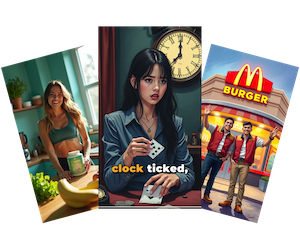
Got great video ideas but need help bringing them to life? Frameloop AI makes it easy to create professional faceless videos with AI-generated visuals, voiceovers, and editing.
Try Frameloop AI For Free